

Why Choose Us
Rich experience
Xiangrun New Material Technology Co., Ltd (XRUN) is part of the Wujio Group, which invested 7.6 Billion RMB of capital in 2016. XRUN currently is the only one whole titanium process industrial chain manufacturer in China who supply titanium and titanium alloy products with excellent quality for aerospace, chemical, semiconductor, medical and other industries.
Professional team
XRUN's team includes a vast array of experts with technical specialism in the titanium industry. Both our main researchers and operators are having years of experience in Titanium industry with high professionalism and expertise.
Complete range of products
XRUN's assets begin with titanium ore, coal mine, and power generation facilities, our main products include titanium sponge, titanium and titanium alloy ingots, forgings, bars, plates, sheets, coils and strips.
One-stop solution
The ambition of the group is to establish XRUN as the industry's leading titanium and titanium alloy manufacturer with the whole process industrial chain. Also We have created the first end-to-end titanium supply chain in China. "Coal-Electricity-Titanium Ore-Titanium Sponge-Titanium Processing Materials-Customer Products".Achieving a seamless flow from raw material, to manufacture, to market.
Titanium is a highly versatile metal used in a range of industries. Its biocompatibility means that it is less likely to be rejected by the human body than some other materials – making it ideal for medical implants and surgical instruments.
Its low density also makes it the ideal material to provide support for broken bones and aid in the healing of other injuries – and also explains its popularity in the aerospace industry.
Titanium has the highest tensile strength-to-density ratio of any existing metal – which means that it is light enough to be used in the construction of aircraft and in similar places where weight makes all the difference, but strong enough to withstand significant stress.


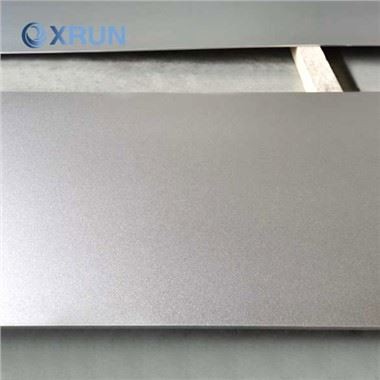


Titanium plates are available in various types, each designed to meet specific requirements and applications. Here are some common types of titanium plates:
Commercially Pure Titanium Plates
These plates are made from pure titanium, with a composition of 99.5% or higher. They offer excellent corrosion resistance, high strength-to-weight ratio, and good formability. Commercially pure titanium plates are commonly used in industries such as aerospace, marine, chemical processing, and medical.
Titanium Alloy Plates
Titanium alloys are created by adding specific alloying elements to pure titanium, enhancing its properties. Common titanium alloy plates include Grade 5 (Ti-6Al-4V), Grade 2 (Ti-6Al-4V), and Grade 12 (Ti-0.3Mo-0.8Ni). These alloys offer improved strength, corrosion resistance, and heat resistance compared to commercially pure titanium.
High-Strength Titanium Plates
These plates are specifically designed for applications that require exceptional strength and durability. They are typically made from high-strength titanium alloys such as Grade 5 and Grade 23. High-strength titanium plates are used in industries such as aerospace, defense, and sports equipment manufacturing.
Titanium Clad Plates
These plates consist of a layer of titanium bonded to another metal or alloy, such as stainless steel or copper. Titanium clad plates combine the benefits of titanium's corrosion resistance with the mechanical properties of the base metal. They are widely used in industries where corrosion resistance and strength are both important.
Customized Titanium Plates
In addition to standard types, titanium plates can also be custom-made to meet specific requirements. This includes plates with specialized dimensions, thicknesses, or surface finishes to suit unique applications.
Top 5 Benefits of Using Titanium Plates in the Aerospace Industry
Titanium is an ideal material for use in aerospace as it offers an impressive strength-to-weight ratio. Titanium plates offer impressive properties and boast corrosion resistance, biological compatibility, and high-temperature performance.
High Strength
Titanium is an extremely durable material widely utilized by aerospace engineers for years. It makes an ideal material for lightweight yet strong components and can withstand higher temperatures without losing its properties.
Material that offers excellent corrosion resistance can also be an ideal choice, aircraft turbines, aerospace structural components, sports equipment or biomedical implants.
Ti alloys possess excellent diffusion bonding (DB) properties that easily form titanium into complex shapes. This type of bonding can be particularly advantageous in industrial and aerospace applications where high pressures exist within the alloy itself.
Lightweight
Titanium is an ultralight metal with many benefits for aerospace applications. With an exceptional strength-to-weight ratio and lightweight properties that reduce aircraft weight without compromising structural integrity.
Fuel efficiency also allows an aircraft to fly for longer with less frequent stops for refuelling.
Titanium is an economical option in aerospace applications due to its lightweight properties. Titanium alloys have also proven useful, resulting in significant weight savings across various applications.
Corrosion Resistance
Aerospace titanium is an integral part of aircraft and spacecraft due to its outstanding corrosion resistance. Furthermore, this material boasts exceptional strength-to-weight ratio and fatigue strength properties, making it an excellent material choice for structural components and systems.
Titanium achieves corrosion resistance through an air and oxygen environment by producing a thin film of titanium oxide around its surface that protects it. If that protective film were ever lost, titanium would corrode just like any other corrosive metal.
High-Temperature Resistance
Titanium plates are utilized in many aerospace applications to improve aircraft performance, as it's a highly resilient material able to withstand harsh environments present on aircraft and spacecraft.
Titanium offers excellent heat resistance, making it a fantastic material choice for applications requiring strong yet resilient materials that can withstand fluctuating temperatures — particularly relevant in aircraft operating at various altitudes with vast temperature differences during their lives.
Flexibility
Titanium plates offer superior flexibility and strength. Titanium can withstand extremely hot temperatures without losing shape, making them an excellent option when selecting metal material for parts production.
Titanium sheet strength can be measured using its tensile strength or maximum stress threshold. Comparatively, stainless steel offers 485 MPa of tensile strength, titanium plates boast only 480MPa.
Titanium Plate Machining Tips


Keep temperatures down
Since titanium doesn't conduct heat well, most of the energy generated during the cutting process goes into the tool. This heat can have several adverse effects, the most notable of which is causing premature tool failure. It can dull your tool and cause rubbing, generating even more heat and continuing the cycle. The dulling of your tools can be expensive for you and damaging to the piece of work.
Poor heat dissipation can also lead to strain hardening, in which the edges of your workpiece harden and become tougher to cut. This hardening affects the speed at which you need to be cutting and can lead to faster tool degradation. Using a generous amount of coolant can help bring down temperatures.
Make your surface stable
One effective way to put added strain on your tool is to expose it to shock and jarring changes in force. It is common for the tool to experience this when it enters and exits the material. Instead of inserting the tool directly into the metal, gently arc it inward to ease it into the cut. This arc lets you gradually increase the pressure and makes the entry less jarring on your tool and less likely to tear the material. This path should follow thick-to-thin milling, as well as move in the same direction, clockwise or counterclockwise, as the tool.
Watch your tools
A sharp tool is necessary for efficient cutting, and titanium can wear your tools very quickly. Inspect them frequently and replace them if they start to wear. A dull tool will add heat and consequently wear out even faster.
Leave your tool a lot of room
By using a tool with a smaller diameter, you create more exposure to air and coolant. Doing this allows the cut edge to spend more time cooling down. It also isn't exposed to the tool and its heat for as long.
Reduce galling
Titanium alloys to other materials readily, which can cause galling and rewelding of the edges while cutting. Keeping the heat down, using sharp tools and using lubricant can help reduce this effect.
Control chipping
Edge chips occur when the metal pieces being cut off compress and adhere to the edge of the cutting tool. As more pieces build up on the cutting tool, they negatively impact performance and can result in a more quickly damaged tool and a poor cut. Using a sharp tool and lubricant can help reduce chipping.
Why Are Titanium Plates Mportant
Titanium plates are used in different applications, including construction, aviation, military, aerospace, dental prosthetics, and orthotics. The use of titanium plate not only allows the individual to enjoy the benefits of this metal's unique properties but also provides an option to replace or repair bone. Titanium is a metal that is found in nature, and it has many important uses. There are many aspects of today's life that titanium plates can help us with. Titanium can reduce the risk of osteoarthritis, due to its ability to immobilize joints and minimize inflammation, as well as how it helps prevent bone fractures. Titanium plates are useful for different parts of the human body because it is lightweight, strong, and can resist corrosion. There are many ways to use titanium plates including but not limited to artificial hip joints, dental implants, orthopedic implants, and bone replacements.
Production Process of Titanium Plate
Titanium plates are lighter and have a weight-to-strength ratio of 1.7 times that of steel plates. Aluminum, manganese, iron, and molybdenum can improve the strength of titanium alloys. Titanium is a non-oxidizing metal that can withstand a variety of conditions.
The Kroll Process
The Kroll process is used to make titanium plates from raw titanium material.
In the industrial-scale Kroll method, titanium dioxide and chlorine react to create titanium tetrachloride at 800-850 °C in a stainless-steel retort. The titanium tetrachloride is reacted with magnesium to remove the chlorine, leaving behind the pure metal. Leaching or vacuum distillation purifies the porous, metallic titanium sponge. The sponge is compressed, crushed, and melted in a consumable carbon electrode vacuum arc furnace. Under vacuum, the molten ingot is allowed to harden. Titanium is frequently remelted To get rid of inclusions and guarantee homogeneity.
To produce TiCl4, silicon, iron, aluminum, magnesium, and calcium impurities are eliminated using fractional distillation. Then, pure TiCl4 is reduced by molten magnesium between 1073 and 1173 K in an argon environment to create sponge titanium.
Hot Rolling Titanium Plates
The heated metal is passed between two rolls to flatten, extend, decrease the cross-sectional area, and achieve a consistent thickness. The titanium slabs are rolled into black coils of extremely precise thickness and shape. Then they are transformed into white coils by heat treatment, pickling, and finishing in the annealing and pickling facility. Hot rolling can increase ductility, formability, weldability, toughness, strength, vibration, and shock resistance.
Cold Rolling Titanium Plates
Hot rolling produces thinner metal strips with good surface quality. Titanium is run through rollers during the cold rolling process at temperatures lower than its recrystallization temperature. As a result, titanium's yield strength and hardness increase through compression and squeezing.
Titanium has many characteristics that make it the ideal metal for medical applications. Its advantages include:
Durability:Medical implants made from titanium alloys routinely last 20 or more years inside the human body. Higher strength-to-weight ratio. Titanium is stronger and lighter than stainless steel, which largely accounts for its widespread use in surgical implants.
Non-ferromagnetic property:Because it isn't magnetic, medical titanium doesn't interfere with magnetic resonance imaging (MRI) machines. Because of this property, patients with titanium implants can still safely undergo MRI examinations.
Biocompatibility:Unlike other metals, medical titanium can remain in constant contact with living tissue without adversely affecting it.
Biointerfacing:Titanium implants have an engineered biointerface with biomimetic motifs that increase cell contact area by as much as 75%, enhancing the cell's binding properties. As a result, their use further reduces the chance of implant rejection.
Osseointegration:Medical titanium implants can physically bond with natural bone, eliminating the need for adhesives.
The Quality of Titanium Plates Depends on the Smelting Process
Titanium plates have high corrosion resistance and specific strength. They are widely used in electric power, chemical industry, aviation parts, building materials, sports equipment, medical and other fields, and are still expanding. Titanium plates have the advantages of low price, high performance, multiple functions, and easy production.
The quality of titanium plates depends largely on the smelting process, including the chemical composition of titanium, the cleanliness of titanium water (gases, harmful elements, inclusions) and the quality of steel billets (composition segregation, decarburization and surface conditions). These are Critical control points for smelting operations. Industrial titanium plates also require sufficient hardenability to ensure uniform microstructure and mechanical properties of the entire spring segment. Oxide inclusions in titanium are the main cause of fatigue cracks, and D inclusions cause greater damage to fatigue life than B inclusions.
Due to its special physical and chemical properties, the welding process of titanium plates is very different from other metals. Titanium welding is a TIG welding process that uses inert argon gas to effectively protect the welding area. Before using argon gas, check the factory certificate of the bottle, confirm the argon gas purity index, and then check whether the bottle valve is leaking or failing. The metal in the welding area above 250℃ is not contaminated by reactive gas N0h and harmful impurity element CFeMn. The purity is not less than 99.98%, the water content is less than 50mg/m32 argon gas, industrial grade pure argon gas, can form a coarse crystal structure. The welding process must be carried out according to the predetermined construction sequence, and no large welding residual stress and residual deformation can be generated.
Certificate


Our Factory
Xiangrun New Material Technology Co., Ltd (XRUN) is part of the Wujio Group, which invested 7.6 Billion RMB of capital in 2016. The ambition of the group is to establish XRUN as the industry's leading titanium and titanium alloy manufacturer with the whole process industrial chain. Also We have created the first end-to-end titanium supply chain in China. "Coal-Electricity-Titanium Ore-Titanium Sponge-Titanium Processing Materials-Customer Products".Achieving a seamless flow from raw material, to manufacture, to market.
XRUN currently is the only one whole titanium process industrial chain manufacturer in China who supply titanium and titanium alloy products with excellent quality for aerospace, chemical, semiconductor, medical and other industries. Also, we are cooperating with several international well-known companies.
XRUN's assets begin with titanium ore, coal mine, and power generation facilities, our main products include titanium sponge, titanium and titanium alloy ingots, forgings, bars, plates, sheets, coils and strips.
At present, the XRUN has capability of annual output of 30,000 tons titanium sponge,10,000 tons of titanium materials and 10,000 tons of titanium coils&strips.
XRUN's team includes a vast array of experts with technical specialism in the titanium industry. Both our main researchers and operators are having years of experience in Titanium industry with high professionalism and expertise.

FAQ
Q: What are the differences between titanium and stainless steel?
Q: Is titanium used in everyday items?
Titanium has been used to create jewellery clasps for a long time now, however in recent years jewellery made entirely from titanium has become more and more popular. This is likely because of how difficult it is to damage and dent. Titanium rings and bands, for example.
Because of how lightweight titanium is, eyeglasses are commonly manufactured using this metal.
Q: What are the advantages of using titanium plates?
Q: What grades of titanium are commonly used for plates?
Q: What are the typical applications of titanium plates?
Q: What sizes for titanium plates?
Q: What is a titanium grade 2 sheet?
Q: How strong is a sheet of titanium?
Q: Is it necessary to remove titanium plate?
Q: How do you clean titanium plates?
Q: What is the tolerance of titanium plate?
Q: How do I choose the right type of titanium plate?
Q: How should I store titanium plates?
Q: What is titanium plate used for?
Q: Can titanium plates be left in the body safely?
Q: How long do titanium plates last in the body?
Q: What are the applications of titanium?
Q: Why titanium plates are used in surgery?
Q: Why are titanium plates mportant?
Q: At what temperature does titanium plate lose strength?
As one of the leading titanium plate manufacturers and suppliers in China, we warmly welcome you to buy or wholesale high-grade titanium plate in stock here from our factory. All our products are with high quality and competitive price.
Grade 5 Titanium Plate, Grade 3 titanium plate, Grade 9 Titanium Plate